.png)














AI Estimates
Quote Faster.
Win More Work.
Voice to Estimate | Documents and Photos | Pricebook Pricing | Customer Options | Field Editing | Digital Approval | Estimate to Job
Voice to Estimate | Documents and Photos | Pricebook Pricing | Customer Options | Field Editing | Digital Approval | Estimate to Job
Describe the work from the field. PropelOne builds the estimate using the customer record and your pricebook.
Speak the scope. PropelOne creates line items, quantities, and customer ready wording.
Price every estimate from the same company pricebook.
Explain what is included and guide the customer to the next step.
Record the selected option and book the approved work.
Keep the conversation, version, selection, and next step on the customer record.
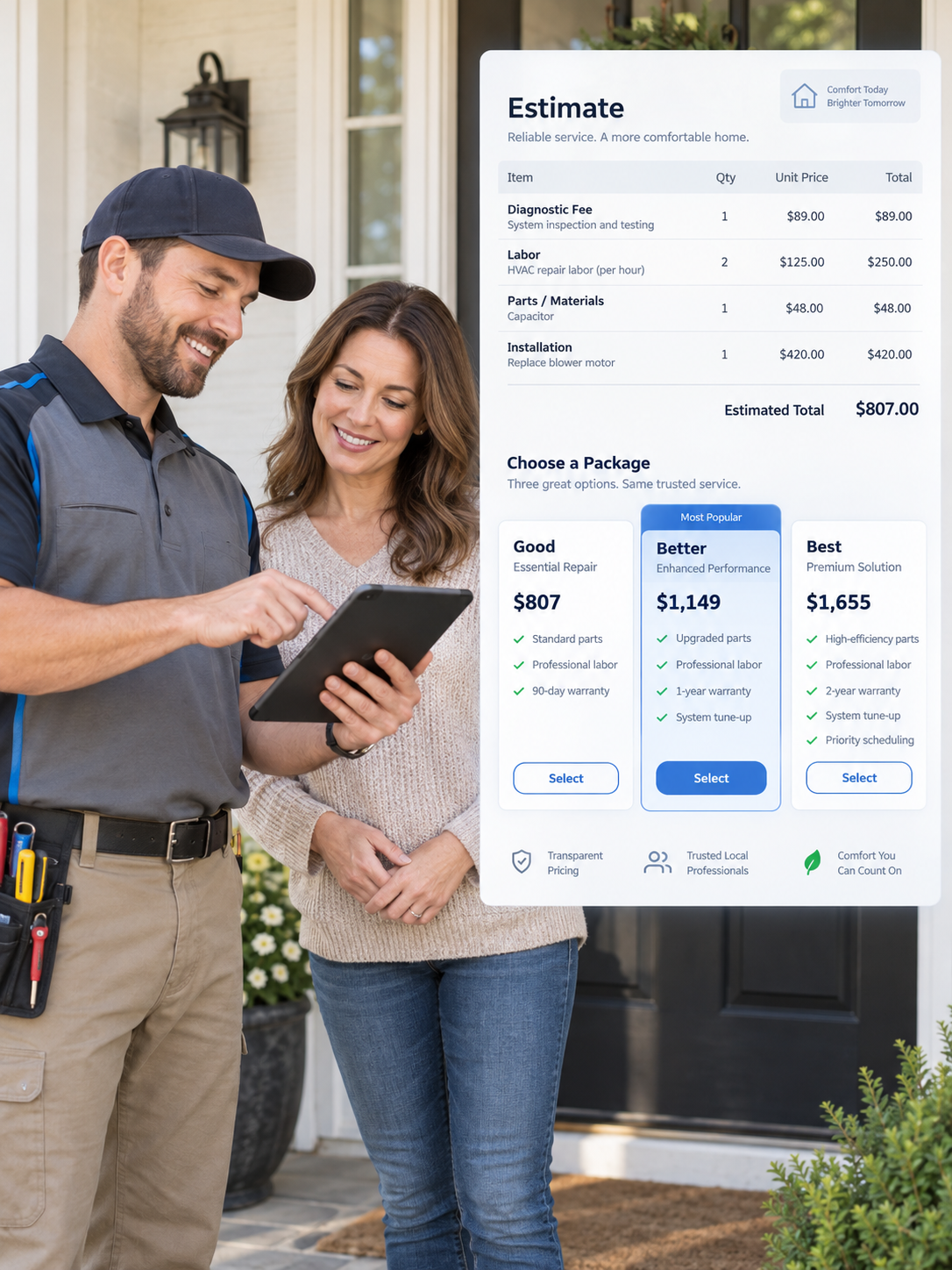
Build, price, send, approve, and schedule every estimate in one workflow.
PropelOne organizes your notes and documents into a draft you control.

Present one price or several options without rebuilding the estimate.

Use the same labor rates, costs, services, and markups on every estimate.

Customers review, choose, sign, and pay without printing.

Track unanswered estimates and follow up automatically.
Move the approved scope to dispatch without retyping.
Here is what happens after a technician finishes looking at the work.
Out loud, on the way back to the truck, in whatever order it comes out.
Photos from the site, the supplier quote, the inspection report, the load calculation.
Voice AI matches the work to your pricebook and lays out the line items, the scope, and the options.
Prices, quantities, and wording are all editable before anything is sent.
By text or email, opened on a phone, in your branding.
They approve an option and sign, they ask a question, or they go quiet and the follow-up starts on its own.
The approved scope lands on the dispatch board with the parts attached, and the invoice waits on the same line items.
The customer gets a price the same day, and nobody retypes the job to make it happen.
It uses your notes, files, and pricebook to create a draft. You review everything before sending.
Quotes, calculations, reports, specifications, and site photos.
Yes. Speak the job details and review the draft on your phone.
No. Send the number of options that fits the job.
Your pricebook, including your labor, costs, services, and markups.
Yes. Customers can approve, sign, and pay a deposit from their phone.